_edited.png)
The Modern Campaign Technology Stack: A Strategic Guide for 2026 Outreach

Updated: Jun 18
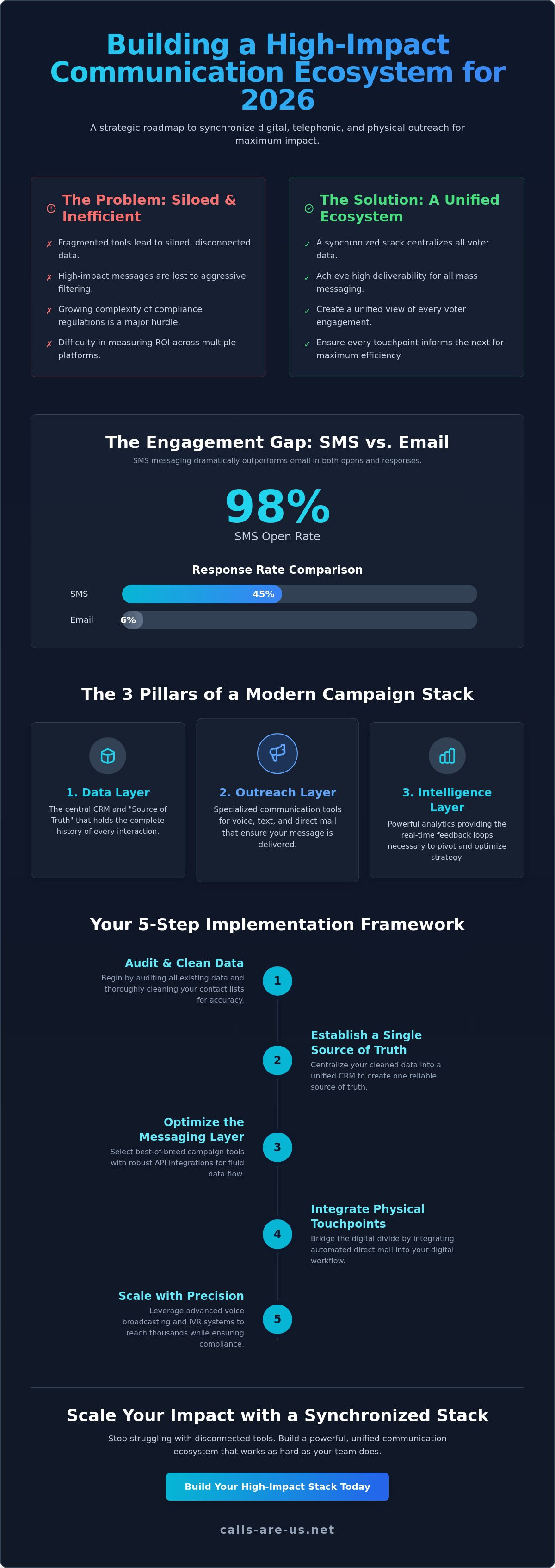
SMS messages boast a staggering 98% open rate and a 45% response rate, which dwarfs the 6% response rate typically seen in email campaigns. Despite these powerful numbers, many organizers feel trapped by siloed data and the growing complexity of compliance regulations. It’s frustrating to watch high-impact messages get lost to filtering or to struggle with measuring ROI across disconnected campaign communication tools. You deserve a system that works as hard as your team does.
This guide provides a strategic roadmap to assemble a high-impact communication ecosystem that synchronizes digital, telephonic, and physical outreach. You’ll learn how to create a unified view of voter engagement, achieve high deliverability for mass messaging, and navigate the latest 2026 regulatory standards. We’ll break down the essential components of a modern stack, including live calling, peer-to-peer texting, and direct mail, to ensure your outreach is both efficient and deeply human.
Key Takeaways
Build a unified outreach ecosystem. Transition from fragmented, siloed applications to a synchronized stack that centralizes your voter data and engagement.
Optimize your messaging layer. Select campaign communication tools that offer robust API integrations to ensure a fluid flow between your CRM and your outreach platforms.
Reclaim trust through physical touchpoints. Integrate automated direct mail into your digital workflow to create meaningful connections that cut through digital noise.
Establish a reliable implementation framework. Follow a methodical five-step process to audit your data, clean your contact lists, and secure a single source of truth for your campaign.
Scale with confidence and precision. Leverage advanced voice broadcasting and IVR systems to reach thousands of recipients instantly while maintaining strict regulatory compliance.
Table of Contents
What is a Campaign Technology Stack and Why Does it Matter in 2026?
Successful mobilization is no longer about the loudest voice; it's about the most synchronized system. A modern campaign technology stack is a synchronized ecosystem of software and services designed to identify, engage, and mobilize your audience with surgical precision. In 2026, the era of fragmented tools is over. Effective leaders have transitioned from using siloed apps to building integrated outreach ecosystems where every touchpoint informs the next. This connectivity ensures that no voter is left behind and no data point is wasted.
This ecosystem rests on three primary pillars that must work in total harmony. First, the Data Layer serves as your central CRM and "Source of Truth," holding the history of every interaction. Second, the Outreach Layer houses your campaign management tool and essential communication channels like voice and text. Third, the Intelligence Layer provides the analytics necessary to pivot in real time based on voter behavior. Adopting a comprehensive mass communication strategy is now a non-negotiable requirement for anyone serious about large-scale impact.
To better understand how these integrated systems function, watch this helpful video:
The Evolution of Campaign Technology
Campaigning has moved far beyond the era of simple legacy robocalls. Today, sophisticated Interactive Voice Response (IVR) systems and AI-assisted calling provide a level of interaction that was previously impossible at scale. This evolution has birthed a true "omni-channel" approach where personalized text, authoritative voice, and tangible direct mail work together to reinforce a single, cohesive message. While many seek the convenience of "all-in-one" platforms, these often lack the depth of specialized, best-of-breed campaign communication tools. Specialized tools provide the reliability, high deliverability, and advanced feature sets that generic, jack-of-all-trades platforms simply cannot match. Choosing specialized partners ensures that your high-stakes messages actually reach their destination without being blocked by filters or compliance hurdles.
Identifying Your Core Stack Requirements
Selecting the right tools begins with a clear assessment of your operational needs. You must weigh your total audience size against your required outreach frequency to ensure your stack doesn't buckle during the peak of the season. A balanced approach is essential for maintaining a human-centric core. You need to determine where automated broadcasting offers the most efficiency and where personalized live contact is required to build deep, lasting trust. Finally, evaluate your need for real-time feedback loops. Your stack must be able to ingest response data instantly. This allows your team to refine targeting, adjust messaging, and reallocate resources on the fly to maximize every dollar spent.
The Outreach Layer: Voice, SMS, and P2P Messaging
Execution is where strategy meets reality. The outreach layer of your stack represents the frontline of your engagement; it's the bridge between your static data and a dynamic human connection. By selecting specialized campaign communication tools, you ensure that your message cuts through the noise of a crowded election cycle. Whether you're mobilizing a local district or a national movement, your choice of voice and text platforms determines your ultimate reach and resonance.
Voice Broadcasting and Automated IVR
Voice broadcast allows you to deliver high-impact audio messages to thousands of recipients instantly. It remains a cornerstone of effective political voice broadcasting, especially during critical Get Out The Vote (GOTV) windows. To maximize impact, focus on three key elements: professional recording quality, high-authority delivery, and intelligent routing. Using technology that prioritizes live listeners over voicemail ensures your message has the highest possible chance of immediate engagement. Adhering to TCPA regulations is critical; for instance, automated calls to landlines are limited to three per month without prior consent, while mobile calls require explicit opt-in.
Interactive Voice Response (IVR) takes this a step further by turning a one-way broadcast into a two-way data collection tool. You can use IVR for rapid polling, volunteer recruitment, and gathering real-time survey data. This creates a feedback loop that informs your strategy daily. For best practices on official outreach, the U.S. Election Assistance Commission toolkits offer valuable resources for maintaining high standards of communication and transparency.
Strategic SMS: P2P vs. Mass Texting
Text messaging in 2026 requires a nuanced, two-pronged approach. Mass texting is your primary tool for efficiency. It allows you to reach your entire opt-in list with urgent updates or "blast" announcements in seconds. However, for deeper engagement, Peer-to-Peer (P2P) texting is the gold standard. P2P enables human-centric, one-on-one conversations that are essential for voter persuasion and complex fundraising asks. This personal touch fosters a sense of relationship that automated blasts simply cannot replicate.
Deliverability is the silent gatekeeper of your success. High SMS filtering rates can cripple a campaign if you don't adhere to strict compliance and carrier protocols. Following a comprehensive guide to avoiding SMS filtering is necessary to protect your sender reputation and ensure your campaign communication tools remain effective. If you're looking to scale these operations without sacrificing deliverability, exploring the infrastructure at Calls-Are-Us can help you reach your goals with confidence.
Bridging the Digital-Physical Divide with Direct Mail
Digital saturation has created a unique opportunity for physical media. While screens are crowded and inbox filters are aggressive, the mailbox remains a high-trust environment where your message can breathe. Direct mail is no longer a legacy tactic; it's a vital component of integrated campaign communication tools. By delivering a tangible touchpoint, you reinforce the digital ads and text messages your audience sees daily, creating a multi-sensory experience that builds lasting name ID.
Modern outreach relies on the seamless integration of mail fulfillment into your digital CRM. You shouldn't be sending mass mailers to every household blindly. Instead, use your voter data to trigger "smart" mailers based on specific engagement behaviors. This ensures that every piece of mail is highly relevant to the recipient, which significantly increases the likelihood of a meaningful response. When a physical postcard arrives to reinforce a previous voice broadcast, the message becomes more credible and authoritative.
Modernizing the Mail House
Automated workflows have revolutionized how we approach the printer. You can now set up triggers where a voter who interacts with an IVR survey or a P2P text receives a follow-up postcard within days. Bridging the gap from physical to digital is equally simple; using QR codes allows a recipient to jump from a postcard directly to a personalized landing page or donation form. Developing a robust political direct mail strategy is essential for establishing a grounded presence that digital-only campaigns simply cannot match. It transforms a fleeting digital impression into a permanent fixture on a voter's kitchen table.
Direct Mail for Fundraising and Advocacy
Tactile outreach remains a powerhouse for donor solicitation and high-stakes advocacy. While digital response rates can fluctuate, the reliable nature of a physical letter package often yields higher benchmark response rates for high-dollar fundraising. Success often comes down to multi-channel sequencing. Try sending a mass text "heads up" to your list a day before the mailer is scheduled to arrive. This creates anticipation, validates the physical piece, and increases the open rate of the envelope. For national campaigns, the challenge lies in balancing premium print quality with high-volume postage rates. Achieving this balance allows you to maintain cost-efficiency while projecting the professional authority necessary to win.
Building Your Stack: A 5-Step Implementation Framework
Strategy only wins when the execution is flawless. Moving from a theoretical plan to a functioning outreach ecosystem requires a methodical approach that prioritizes data integrity and legal resilience. You must build a foundation that supports rapid scaling without compromising the quality of your human connections. By following this five step framework, you can ensure your campaign communication tools work in perfect unison from day one.
Audit your current data: Clean your existing lists and identify a single "Source of Truth" CRM. High quality outreach is impossible if your data is fragmented or outdated.
Select your Outreach Layer: Prioritize tools that offer robust API integration. Your voice, text, and mail platforms must be able to "talk" to your CRM to ensure a seamless data flow.
Establish Compliance Protocols: Pre-register for 10DLC and verify your TCPA consent workflows. In 2026, carrier scrutiny is at an all time high; proactive registration is the only way to protect your deliverability.
Design Your Multi-Channel Workflows: Map the specific journey from the first peer-to-peer text to the final follow up call. Logic based triggers ensure that your team spends time on the most engaged prospects.
Launch, Measure, and Optimize: Use real time analytics from your IVR and SMS platforms to pivot your strategy. If a specific message isn't resonating, your stack should allow you to adjust in minutes, not days.
Navigating the Compliance Landscape
Compliance is the most significant barrier to entry in modern outreach. Navigating the 2026 10DLC registration requirements is a mandatory step for any campaign intending to use texting for mobilization or fundraising. Failure to register properly results in immediate carrier blocking and heavy fines. Professional calling centers provide an essential layer of legal protection by ensuring every interaction adheres to TCPA standards. Managing opt-outs across voice, text, and email simultaneously is no longer optional. Your stack must automatically synchronize these requests to respect recipient preferences and maintain your campaign’s integrity.
Integrating for Maximum ROI
The true power of a modern stack lies in its connectivity. Using APIs to link your calling platform directly to your donor management software eliminates the need for manual data entry and reduces the risk of human error. When a call result updates your CRM in real time, your entire team gains immediate visibility into the health of the campaign. Some industry professionals report that moving to an API driven stack can reduce administrative bloat by as much as 40 percent. This efficiency allows you to reallocate precious resources toward high impact activities like voter persuasion and direct advocacy. To start building your high performance outreach system, explore the integrated solutions at Calls-Are-Us today.
Scaling Your Impact with Calls-Are-Us
Infrastructure dictates the limits of your influence. To move a nation, you need more than a message; you need a delivery system that scales without friction. Calls-Are-Us provides the sophisticated voice broadcasting and IVR systems required to manage national outreach while maintaining the nuance of a local conversation. These systems are built for high-stakes environments where every second counts and every response must be captured with surgical precision. We ensure that your technical foundation is as ambitious as your vision.
Effective campaign communication tools must offer more than just raw volume. Our peer-to-peer (P2P) and mass texting platforms are engineered for industry-leading deliverability, ensuring your calls to action actually reach the palm of the voter's hand. When the situation requires a deeper level of persuasion, our professional live calling center services provide the personalized human contact that builds genuine rapport. We believe technology should facilitate relationships, not replace them, allowing your team to focus on the heart of the message while we handle the complexity of the medium.
Completing your multi-channel presence requires a tangible anchor. Our integrated direct mail fulfillment allows you to synchronize physical mailers with your digital and telephonic efforts, creating a unified front that reinforces your identity across every possible medium. By centralizing these diverse channels, you eliminate data silos and ensure your strategy remains cohesive. This holistic approach transforms fragmented outreach into a powerful, synchronized movement that is impossible to ignore.
Why Organizations Trust Calls-Are-Us
Experience is the ultimate validator. We have successfully partnered with organizations in over 40 states, providing authoritative support for national movements and local advocacy alike. Our team understands the weight of high-stakes political messaging and the technical rigor required to stay compliant in a shifting regulatory environment. We don't just provide software; we champion a philosophy of open, inclusive, and ethical communication. This commitment to integrity ensures that your campaign projects authority while fostering the trust necessary for long-term mobilization.
Ready to Modernize Your Stack?
Every campaign has a unique pulse. We offer customizable solutions that adapt to your specific goals, whether you're launching a grassroots initiative or a massive national mobilization. Our role is one of consultative partnership; we work alongside you to design the workflows and logic that drive results. We help you navigate the technical hurdles so you can stay focused on the win. If you're ready to transform your outreach and maximize your impact, Consult with an Outreach Visionary Today and discover the potential of a truly integrated campaign communication tools stack.
Mastering the Future of Voter Mobilization
Success in 2026 depends on your ability to bridge the gap between high-tech efficiency and high-touch connection. You've seen how a synchronized stack transforms fragmented data into a cohesive movement. By integrating voice, text, and physical mail into a single outreach layer, you ensure that every voter interaction is timely, relevant, and compliant. These specialized campaign communication tools are the foundation of modern advocacy, allowing you to reach your audience exactly where they are.
You don't have to navigate this complex landscape alone. Calls-Are-Us has operated in 40+ states, providing the expertise needed to manage TCPA and 10DLC compliance with absolute confidence. We offer a seamless multi-channel integration that brings your voice broadcast, P2P texting, and direct mail into one powerful ecosystem. Empower your team, protect your reputation, and scale your influence. It's time to move beyond the technical hurdles and focus on the impact you were meant to make.
Build Your Scalable Campaign Stack with Calls-Are-Us Today
The road to victory is built on reliable infrastructure and meaningful dialogue. With the right stack and a committed partner, your message will resonate louder and go further than ever before. We look forward to seeing the connections you'll build.
Frequently Asked Questions
What are the essential components of a political campaign technology stack?
A high-performance stack includes a centralized CRM for data management, a robust outreach layer for messaging, and a real-time analytics engine. These elements must work in unison to identify, engage, and mobilize your audience effectively. By selecting specialized campaign communication tools, you ensure that your data flows seamlessly between your voter lists and your messaging platforms. This integration prevents data silos and allows for more precise targeting across voice, text, and mail channels.
How do I ensure my campaign text messages don't get filtered in 2026?
Ensuring your messages reach their destination requires strict adherence to 10DLC registration and carrier protocols. You must register your campaign brand and specific use cases with the Campaign Registry to establish a trusted sender reputation. Beyond technical registration, maintaining high-quality content and honoring opt-out requests instantly are critical steps. Professional providers help you navigate these shifting regulations to maximize your deliverability rates and avoid aggressive carrier filtering.
What is the difference between P2P texting and mass broadcasting?
Peer-to-peer (P2P) texting relies on human agents to initiate individual conversations, making it ideal for persuasion and fundraising. Mass broadcasting, conversely, sends automated messages to an entire opt-in list simultaneously for urgent updates or broad alerts. While P2P fosters deep engagement and personal connection, mass broadcasting offers the speed and scale necessary for immediate mobilization. Both methods are essential components of a balanced, modern outreach strategy.
Can I integrate direct mail with my digital campaign tools?
You can integrate physical mail into your digital stack by using API triggers within your CRM. This allows a specific digital action, such as a voter responding to an IVR survey, to automatically trigger the printing and mailing of a personalized postcard. This multi-channel approach reinforces your message across different mediums. It bridges the gap between fleeting digital impressions and the lasting, tangible impact of a physical touchpoint on a voter's kitchen table.
How much does a professional campaign technology stack cost?
The investment required for a professional stack varies based on your total audience size, outreach frequency, and the level of technical integration needed. Most campaigns find that costs are influenced by message volume and the degree of specialization in the tools they choose. You should consult with individual service providers to get specific quotes tailored to your campaign's unique requirements. Focusing on ROI rather than just upfront costs ensures you select tools that deliver reliable results.
What is 10DLC and why does it matter for my outreach strategy?
10DLC stands for 10-Digit Long Code, which is the standard system carriers use to regulate application-to-person (A2P) text messaging. It matters because it provides a verified pathway for campaign messages, offering higher throughput and better deliverability than unregistered traffic. By registering your campaign under 10DLC, you demonstrate transparency and compliance. This builds trust with carriers and ensures your vital campaign communication tools remain functional throughout the election cycle.
How can IVR systems help with voter polling and data collection?
IVR systems facilitate voter polling by delivering automated, interactive surveys that recipients can answer using their phone's keypad. The system captures these responses instantly and can feed the data directly back into your CRM for immediate analysis. This allows your team to identify trends, segment voter lists, and adjust your messaging strategy in real time. It is a highly efficient way to gather large-scale data without the overhead of a manual calling operation.
Is voice broadcasting still effective for modern political campaigns?
Voice broadcasting remains a powerful tool for modern campaigns, particularly for high-authority alerts and urgent Get Out The Vote (GOTV) efforts. It allows you to reach thousands of households simultaneously with a consistent, professional audio message that carries significant weight. When combined with other channels like SMS and direct mail, voice broadcasting provides the broad reach necessary to saturate a district. It is especially effective for reaching landline-heavy demographics where digital-only methods might fail.



Comments