
Authentic Voter Outreach: A Practical Guide for 2026

What if reaching more voters didn’t mean sounding more like a campaign? High-volume messages can feel generic or self-serving when they aren’t built around what people need to know. Voter outreach that feels authentic starts with a different priority: useful, respectful communication that invites connection instead of simply adding to the noise.
It’s understandable to want outreach that reaches voters efficiently, especially when every interaction shapes how they perceive a campaign. But polished copy alone won’t make a message feel personal, and using several channels without coordination can leave people feeling overwhelmed. Strong outreach pairs a clear purpose with an appropriate messenger and a channel that fits the interaction.
This practical guide for 2026 will help you plan relevant messages, choose between peer-to-peer texting, live calls, voice broadcasts, IVR, and direct mail, and coordinate those touchpoints. You’ll also learn how to build listening into the process, so voter communication becomes a two-way exchange rather than a steady stream of asks.
Table of Contents
What Makes Voter Outreach Feel Authentic to Voters?
Authentic voter outreach respects people’s time, offers information that’s relevant to them, and leaves room for a response. It doesn’t treat voters as targets for a campaign message. It treats them as people making their own decisions, with different questions, priorities, and preferred ways to engage.
A casual tone can make a message sound approachable, but it can’t make irrelevant content meaningful. A first-name token or friendly sign-off won’t build trust if the message is vague about who sent it, why it arrived, or what the voter can do next. The broader Get-out-the-vote (GOTV) approach includes varied efforts to encourage participation, but each interaction still depends on its purpose and how it treats the recipient.
For a practical look at shaping a campaign message, watch this video:
Trust grows through clear identification, consistent information, attentive listening, and respect for when someone doesn’t want to continue. Avoid unsupported assumptions about what a voter cares about, make claims the campaign can stand behind, and give people a clear way to ask a question or end the exchange. If a message invites a response, have a process ready to handle it.
How can a campaign recognize voter-centered communication?
Start with a voter’s information need or decision, not the campaign’s preferred talking point. Use plain language, identify the campaign or organization contacting the person, and explain the reason for the outreach. Make the next step clear, whether that’s finding more information, replying with a question, or opting out of further contact.
For example, “Your polling place may have changed. Check your location with your local election office before heading out” gives a voter a specific next step. “Our campaign is working hard. Show your support today” centers the campaign and asks for action without first offering relevant information.
Why do trusted messengers matter?
A message may feel more relevant when it comes from someone the recipient already knows or recognizes. Existing relationships can offer context and credibility, but they don’t guarantee agreement. The National Voter Education Week toolkit is one example of guidance that highlights community messengers in voter education. Use this as a reminder to consider who can communicate clearly and respectfully, rather than assuming one messenger or approach works for everyone.
How to Build Trust Before, During, and After Voter Contact
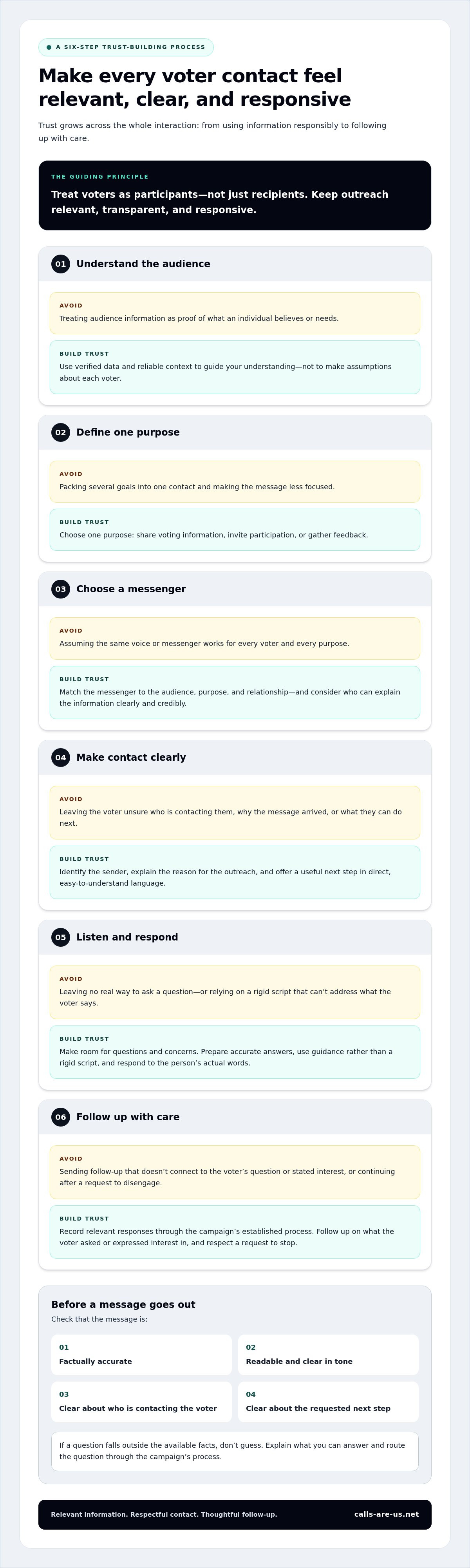
Trust is built across the whole interaction, not just in the first sentence. A message may open the door, but accuracy, attentive listening, and relevant follow-up determine whether the exchange feels respectful. Authentic outreach is relevant, transparent, and responsive communication that treats voters as participants, not just recipients.
Use this six-step process to put that principle into practice:
Understand the audience. Identify likely information needs using verified data and reliable context. Treat those insights as a guide, not proof of what any individual believes or needs.
Define one purpose. Decide whether the contact will share voting information, invite participation, or gather feedback. A focused purpose keeps the message concise.
Choose a messenger. Consider who can explain the information clearly and credibly to this audience. Match the messenger to the purpose and relationship instead of assuming one voice fits every voter.
Make contact clearly. Identify who is reaching out, explain why, and offer a useful next step. Keep the language direct and easy to understand.
Listen and respond. Give voters a real way to ask questions or share concerns. Prepare accurate answers to likely questions, but use guidance rather than a rigid script so the conversation can address what the person actually says.
Follow up with care. Record relevant responses and next steps through the campaign’s established process. Follow up on the voter’s question or stated interest, and respect a request to disengage.
How should campaigns prepare a voter-centered message?
Choose one clear purpose, then shape the message around what the audience needs to know without claiming to understand every individual’s priorities. Before sending, check factual accuracy, readability, tone, sender identification, and whether the requested action is clear. The Center for Civic Design’s guidance on culturally responsive voter education offers ideas for considering how design choices support clear, relevant communication.
Prepare concise answers for predictable questions, such as where to find official voting information or how to get more details about the campaign’s position. If a question falls outside the available facts, don’t guess. Explain what you can answer and use the campaign’s process to route the question appropriately.
What does respectful follow-up look like?
Keep the next contact connected to what the voter asked or expressed interest in. If someone requests details about a policy, provide those details rather than repeating a general campaign appeal. For a broader planning framework, see this voter outreach strategy guide. Campaigns coordinating live calls, texts, voice broadcasts, IVR, or direct mail can use voter communication options to assign each channel a clear role.
Which Voter Outreach Channels Feel Most Personal?
No channel makes a message authentic by itself. Compare options by the interaction the campaign needs, the detail the message requires, and how voters can respond. Choose a channel to fit the purpose, then make the communication clear and respectful.
When do live calls or peer-to-peer texts fit?
Use live calls when the exchange may require explanation, follow-up questions, or a human response to a voter’s concern. Peer-to-peer texting suits concise, two-way contact when a voter may benefit from replying. The conversational format is only a starting point. Relevant content, accurate answers, and respectful handling of replies matter more than making the interaction sound casual.
When do voice broadcasts, IVR, or direct mail fit?
A voice broadcast works when a campaign needs to deliver a consistent recorded message. IVR adds a structured way for people to respond using keypad selections, making it a better fit for clear, limited choices than open-ended discussion. Direct mail offers a physical format for information and can reinforce other campaign communications. In each case, make the purpose and next step easy to understand.
For a closer look at choosing between mobile messaging approaches, read this P2P and broadcast texting comparison. The right choice for voter outreach that feels authentic depends on what the voter needs from the interaction, not on which channel seems most personal in the abstract.
How to Create a Voter Outreach Plan That Stays Human at Scale
Scale should make outreach more coordinated, not more repetitive. A practical plan connects the campaign’s goal to a voter’s information need, assigns a clear role to each channel, and sets a process for responses. That structure helps teams reach people efficiently while keeping communication relevant and responsive.
Build the plan in sequence:
Set the goal and audience need. Be specific about what this contact should help voters understand or do. Use reliable audience insight to shape the message, but don’t treat group patterns as facts about every person.
Choose the channel and messenger. Match the format to the interaction. A voice broadcast can deliver concise information, while a live call can support a nuanced exchange. Decide who should communicate and who will handle replies.
Plan timing and response handling. Map when each touchpoint will happen and what the team will do if a voter asks a question, requests more information, or signals they don’t want further contact.
Review and refine. Look at responses, recurring questions, and whether the intended next step was clear. Adjust the message or sequence based on what the team learns.
How can campaigns coordinate channels without overwhelming voters?
Give every channel a distinct job within one shared message plan. For example, direct mail might introduce a topic, a voice broadcast might share a brief update, and a live call might be reserved for voters who need a conversation. Use text or IVR when the interaction fits their response format. Avoid sending the same appeal through several channels unless there’s a clear reason, such as a useful reminder or follow-up.
A compact informational workflow could work like this: send a concise message directing voters to an official source for a specific election detail; invite questions through an appropriate response channel; route unanswered questions to a trained team member; then follow up only with information connected to the voter’s request. Each contact adds value instead of repeating the same pitch.
How should teams measure whether outreach feels authentic?
Volume alone doesn’t show whether voters found a message useful or trustworthy. Review the quality of responses, the questions people raise, and whether they understand what the message asks them to do. Ask callers, field teams, and other staff who hear directly from voters to share patterns and points of confusion. These signals can help the campaign improve message content and channel roles.
For guidance on fitting one-way recorded messages into a broader outreach plan, explore this political voice broadcasting guide. To coordinate voice, text, live-call, IVR, or mail outreach around your campaign’s goals, plan your voter communication strategy.
How Calls-Are-Us Can Support Authentic Voter Outreach
The principles in this guide lead to a practical choice: match the interaction to the voter’s need, give each channel a clear purpose, and plan how the campaign will handle responses. Calls-Are-Us supports political and civic outreach across several communication channels. The tools help deliver the contact; thoughtful audience selection, relevant messages, and respectful follow-up shape the human experience.
How can different communication services support the same outreach goal?
One campaign goal may call for different kinds of contact. A voter seeking a nuanced discussion may benefit from a live conversation, while a concise update may suit a recorded message. Let the purpose guide the channel, not the other way around.
Live calling center operations support human-to-human voter contact, including conversations where questions or concerns call for a considered response.
Peer-to-peer texting offers a mobile, two-way format for concise exchanges. Mass texting supports high-volume mobile communication, with the message and response plan suited to the campaign’s goal.
Voice broadcasts deliver a consistent recorded message. Interactive Voice Response (IVR) can pair a recorded prompt with structured keypad feedback when voters can respond through clear options.
Direct mail adds a physical touchpoint that can carry campaign information and complement communication through other channels.
These options can work as parts of one plan, but they shouldn’t all repeat the same appeal by default. For example, a campaign might use a broadcast for a brief update, then use live calls for conversations that need more explanation. The sequence should reflect audience needs and give each contact a reason to exist.
What should a campaign do next?
Before selecting a service mix, write down five things: the audience, the communication goal, the message voters need, the type of interaction desired, and the plan for handling replies or follow-up. That outline gives the team a clear basis for deciding which channels belong in the outreach plan and how they can complement one another.
Calls-Are-Us supports campaigns with live calling center operations, peer-to-peer and mass texting, voice broadcasts, IVR, and direct mail. A coordinated plan can align these services with your campaign’s goals and planned voter interactions: Explore voter outreach solutions.
Make Your Next Voter Contact More Meaningful
Authentic outreach begins with the voter, not the campaign’s preferred talking point. Start with a clear purpose, share relevant information, and give people a meaningful way to respond. Then choose the channel that fits the interaction and follow up in a way that respects what voters asked or shared.
That’s how voter outreach that feels authentic can stay personal even as a campaign reaches more people. Calls-Are-Us supports distinct outreach needs through live calling center operations for human-to-human contact, alongside voice broadcasting, IVR, texting, and direct mail. Each channel can play a different role in a coordinated plan, but the message and response process are what make the connection feel thoughtful.
Ready to shape an approach around your audience, goals, and preferred interactions? Explore voter outreach solutions and take the next step toward communication that is clear, coordinated, and useful.
Frequently Asked Questions
What makes voter outreach feel authentic?
Voter outreach feels authentic when it respects people’s time, shares information relevant to their needs, and gives them room to respond. A friendly tone or personalized greeting isn’t enough if the message is unclear or self-serving. Identify who’s contacting the voter, explain why, and make the next step easy to understand. Authenticity comes from the value and care behind the interaction, not just the words used.
How can a political campaign build trust with voters?
Build trust by communicating accurately, being clear about the campaign’s purpose, and following through on questions or requests. Before contacting voters, separate verified information from assumptions and prepare concise answers to common questions. During the interaction, listen without forcing every conversation into a pitch. Afterward, make follow-up relevant to what the voter asked or expressed interest in, and respect their preference to end contact.
Can automated calls feel personal to voters?
Automated calls can feel useful and considerate when they deliver a clear, relevant update without pretending to be a live conversation. Keep the recorded message focused, identify the sender, and explain what the listener can do next. For example, a brief election-related reminder may suit a voice broadcast, while a more nuanced question may call for live human contact. Match the interaction to the purpose.
Which voter outreach channel is best for building relationships?
Live calls are often the best fit when relationship-building requires listening, follow-up questions, or a thoughtful response to concerns. Peer-to-peer texting can support a conversational exchange when voters prefer to reply by text. Neither channel guarantees a strong relationship: the quality of the message and the campaign’s response matter. Choose based on the voter’s need, the complexity of the topic, and the kind of interaction the team can support.
How do campaigns personalize outreach without sounding scripted?
Personalize around reliable context, not assumptions about an individual’s beliefs or priorities. Use a message framework that keeps facts and the main purpose consistent, while allowing the messenger to respond naturally to questions. Avoid overusing first-name tokens or claiming to know what someone cares about. A message sounds more genuine when it addresses a real information need and leaves space for the voter’s own perspective.
How can campaigns scale voter outreach without losing the human touch?
Scale outreach by assigning each channel a distinct role and coordinating contact around one shared purpose. Use voice broadcasts or mass texting for appropriate concise updates, and reserve peer-to-peer texting or live calling center operations for interactions that need replies or human conversation. Track questions and recurring information needs, then adjust messages and follow-up. More contacts don’t automatically mean more trust; relevance and respectful handling matter.
What is the difference between voter education and voter persuasion?
Voter education helps people understand how, when, or where to participate and provides information they can use to make their own decisions. Voter persuasion aims to influence a person’s political choice, such as their view of a candidate or issue. The difference is the purpose of the communication. Make that purpose clear and ensure the message and requested action align with it.



Comments