
Bilingual Voter Outreach: The 2026 Guide to Inclusive Campaign Strategy

Updated: Jun 23
What if your most expensive outreach campaign is actually alienating the very voters you need to win? A direct translation is rarely a strategy. It's often a liability. In an era where cultural nuances dictate digital success, simply converting an English script into Spanish or Mandarin feels like an afterthought rather than an invitation. You understand that building genuine trust across language barriers is the only way to secure a margin of victory in diverse precincts. Effective bilingual voter outreach requires more than a dictionary. It demands a sophisticated blend of technological precision, cultural signaling, and operational scale.
This guide empowers you to master the strategies required to engage diverse electorates through high impact, multi-channel communication. We'll show you how to navigate the complexities of multi-language datasets without the high costs of traditional live agents. You'll learn to maintain strict compliance with the Voting Rights Act and the latest FCC "revoke-all" requirements effective January 31, 2027. We are breaking down the exact workflow to help you navigate 10DLC registration, automate inclusive messaging, and foster deep connections that turn a diverse population into a loyal voting base.
Table of Contents
What is Bilingual Voter Outreach in 2026?
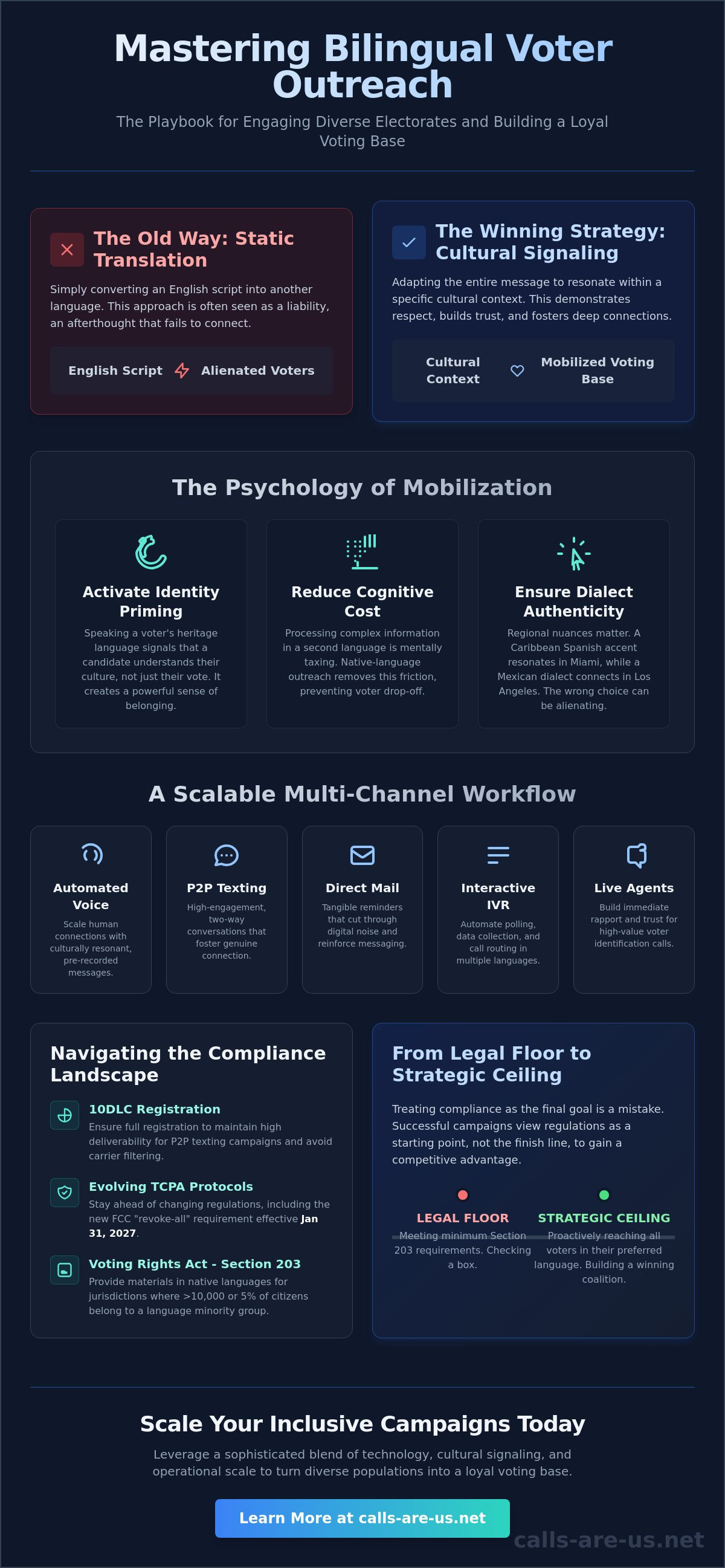
Bilingual voter outreach is the strategic deployment of multi-language communication to engage, educate, and mobilize diverse voter blocks. In the 2026 political landscape, this isn't a passive translation task. It's a dynamic, multi-channel effort. Campaigns that succeed don't just swap words; they adapt their entire message to resonate within a specific cultural context. Translation is a tool, but strategy is the architect. While a dictionary can provide words, only cultural competency provides meaning and trust.
To better understand how this strategy bridges the gap with diverse communities, watch this report on local efforts to boost turnout:
Compliance starts with the Voting Rights Act of 1965, specifically Section 203. This mandate requires jurisdictions with significant language minority populations to provide voting materials in their native tongues. However, treating this law as the final goal is a mistake. Successful campaigns view these regulations as a legal floor, while their strategic ceiling is much higher. You aren't just checking a box for compliance; you're opening a door to a competitive advantage in tight races.
The Legal Foundation: Section 203 and Beyond
Federal law sets the baseline for language access. The Census Bureau updates the list of covered jurisdictions every five years, and the current list remains in effect for the 2026 midterm elections. Jurisdictions must provide assistance if more than 10,000 individuals or 5% of voting-age citizens belong to a single language minority group. This usually covers Spanish, various Asian languages, and Native American dialects. Modern campaigns look beyond these mandates. They build comprehensive, multi-channel programs that reach voters in their preferred language regardless of whether the county is legally "covered."
Cultural Signaling: Why Language Choice Matters
Language is the ultimate signal of respect. It tells a community that their voice matters enough to be heard in their own tongue. This is the difference between "pandering," which feels like a last-minute translation, and "partnership," which demonstrates long-term commitment. One of the most powerful benefits of bilingual voter outreach is household spillover. When you reach a voter in their preferred language, that message often travels to the rest of the family. It fosters a sense of collective inclusion that drives higher turnout at the polls. Unlike traditional approaches that rely solely on expensive, full-time staff, 2026 strategies use technology like Voice Broadcast and P2P texting to scale these human connections across entire states.
The Psychology of Mobilization: Beyond Simple Translation
Mobilization is a psychological process. It relies on the voter's perception of relevance, belonging, and ease. In 2026, the debate over using English versus heritage languages has shifted. Data shows that even for bilingual citizens, bilingual voter outreach acts as a powerful form of identity priming. It signals that a candidate doesn't just want a vote, but understands a culture. This outreach reduces the "cognitive cost" of civic participation. Processing complex ballot measures or registration deadlines is taxing in a second language; providing this data in a native tongue removes the mental friction that often leads to voter drop-off.
Audio outreach requires even more precision. Dialect matters. A voter in Miami responds differently to a Caribbean Spanish accent than a voter in Los Angeles responds to a Mexican regional dialect. Using the wrong nuance can sound clinical or, worse, alienating. Effective communication in 2026 requires three things: linguistic accuracy, regional authenticity, and emotional intelligence. When these elements align, you move from simply delivering information to inspiring action.
Trust as the Primary Currency
Hearing a native language during a live voter identification call builds immediate rapport that digital ads cannot replicate. It transforms a cold interaction into a warm conversation. Cultural resonance is the alignment of linguistic delivery with community values. While the language minority provisions of federal law mandate access, they don't mandate trust. That trust is earned through professional live agents who can navigate sensitive political discussions with empathy and expertise. If you want to refine your ground game, you can partner with seasoned experts who specialize in these high-stakes interactions.
Overcoming the "Pandering" Trap
Authenticity is the antidote to the "pandering" trap. Voters are highly sensitive to "Hispandering" or surface-level attempts at inclusion that lack substance. Generic translations often fail because they miss community-specific idioms and cultural touchpoints. A message that works for a Puerto Rican community might fall flat in a Cuban or Venezuelan precinct. You must ensure your content reflects the lived experience of the specific electorate. Literal word-for-word translation is a technical task; true engagement is a cultural one. By using local vernacular and addressing specific community concerns, you convert "likely voters" into "actual voters" who feel seen and respected.
Multi-Channel Execution: Voice, Text, and Direct Mail
A national campaign is only as strong as its least accessible channel. To secure victory in 2026, your mass communication strategy must be inherently multi-language. You cannot achieve true national scale by speaking only one language while ignoring the linguistic diversity of the modern electorate. Success requires a synchronized approach across voice, text, and mail to ensure your message resonates in every household. This multi-channel workflow begins with capturing language preferences in your CRM during the very first touchpoint. By tagging a voter's preferred language early, you ensure every subsequent interaction is relevant, respectful, and effective.
Bilingual Voice Broadcasting and IVR
Precision technology allows you to give voters a choice. Using IVR data collection, you can prompt recipients to select their preferred language via a simple keypad entry. This data immediately informs your outreach strategy, allowing you to route calls to bilingual agents or play specific pre-recorded messages. Mirroring the success of Orange County's Bilingual Outreach Program, high-performing campaigns use these tools to ensure quality control and community trust. Pre-recorded messages from recognized community leaders in their native tongue provide an extra layer of authenticity that automated systems alone cannot replicate. It scales your audio outreach while maintaining a warm, human-centric core.
P2P Texting: The High-Engagement Channel
Peer-to-peer texting is the gold standard for bilingual voter outreach because it fosters genuine conversation. Unlike one-way broadcasts, P2P allows voters to ask questions and receive immediate, culturally nuanced answers. Managing bilingual scripts for your agents or volunteers is vital for maintaining a consistent voice. You should incorporate culturally relevant imagery and emojis in MMS outreach to boost engagement rates. This channel transforms a simple notification into a meaningful interaction, making it the most effective tool for mobilizing younger, diverse voter blocks who prefer mobile-first communication.
Integrated Direct Mail
Physical mail provides a tangible touchpoint that reinforces your digital efforts. The most effective 2026 mailers utilize a "Double-Sided" strategy, featuring English on one side and a secondary language on the reverse. This ensures legibility and impact for every member of a multi-generational household. To bridge the gap between physical and digital, you must include QR codes that lead directly to language-specific landing pages. This integration allows you to track engagement in real-time and follow up with a text or call within hours of the mail being delivered. It creates a seamless experience that guides the voter from their mailbox to the ballot box.
Compliance and Best Practices for Targeted Outreach
Compliance is the invisible foundation of every successful bilingual voter outreach program. In 2026, the regulatory environment is stricter and more complex than ever. You must balance the urgent need for high-volume communication with the rigid requirements of the Telephone Consumer Protection Act (TCPA). Mobile outreach requires prior express consent, and the stakes for non-compliance are high. The FCC has extended the effective date of the "revoke-all" requirement to January 31, 2027. This means your systems must be prepared to treat a single revocation of consent as a universal opt-out for every type of informational call or text. You must honor these "Stop" or "Unsubscribe" requests within 10 business days to remain within the safe harbor of the law.
Data privacy is both a legal mandate and an ethical obligation. When you collect language-preference data, you are handling a sensitive marker of a voter's identity. This information should be used to empower the voter, not to pigeonhole them. Ethical handling involves transparent data collection, secure storage, and clear opt-in pathways. Relying on machine translation for political nuance is a significant risk. AI often misses the legal gravity of ballot measures or the emotional weight of a candidate's platform. To ensure your campaign stays compliant while reaching maximum scale, consult with our regulatory experts today.
Navigating 10DLC and A2P Standards
Carrier filtering has become increasingly aggressive to combat spam. To ensure your messages reach the inbox, you must register your bilingual campaigns through the 10DLC (10-digit long code) framework. This process involves three critical steps: register your brand, verify your campaign through Campaign Verify, and pay the recurring monthly fees. Your "Stop" keywords must be supported in every language used in your outreach. If you send a text in Spanish, the opt-out instructions must also be in Spanish. Providing clear, compliant opt-in messages in a voter's native tongue builds trust and reduces the likelihood of your number being flagged by mobile carriers.
Quality Control in Translation
Literal translation is often the enemy of clear communication. Complex ballot measures and legal jargon require a human touch to preserve the original intent. You should implement a "Back-Translation" process where a second linguist translates the content back into English to verify its accuracy. This ensures that your message hasn't been distorted by cultural idioms or technical errors. Professional political translators are a non-negotiable expense for serious campaigns. By investing in human expertise, you avoid the embarrassing and costly errors that come with automated tools. You move beyond simple words and toward genuine, legally sound civic engagement.
Scaling Inclusive Campaigns with Calls-Are-Us
Scale is the ultimate test of any bilingual voter outreach program. Calls-Are-Us serves as the technological foundation for your operation, transforming scattered efforts into a unified, high-impact machine. We provide the infrastructure to engage diverse electorates with the precision of a local ground game and the power of a national platform. By serving as your political campaign call center, we ensure every interaction is handled by professional live agents who specialize in voter identification. This isn't just about making calls. It's about building a sustainable bridge between your candidate and every community they seek to represent.
Our platform integrates Voice Broadcast, P2P Texting, and Direct Mail into a single, seamless workflow. This allows you to launch a multi-channel offensive that reaches voters wherever they are, in the language they speak at home. We believe that ethical communication is the only path to sustainable influence. Our commitment to inclusivity means we don't just provide tools; we champion a philosophy of open dialogue and mutual respect. We empower your campaign to move beyond transactional politics and toward genuine community connection.
The Calls-Are-Us Advantage
We manage high-volume outreach across 40+ states with surgical cultural precision. Our IVR systems are designed to streamline language routing, ensuring that voters are instantly connected to the resources they need in their preferred tongue. This "Authoritative Visionary" approach modernizes traditional tactics, replacing guesswork with data-driven results. We help you navigate complex voter pools by automating the technical hurdles, allowing your team to focus on the message that wins hearts and minds. Our systems handle the heavy lifting of data management and regulatory compliance, ensuring your campaign remains both effective and ethical.
Getting Started: Your Bilingual Roadmap
Transitioning from a monolingual strategy to a fully inclusive plan is a structured, three-step process. It begins with auditing your current datasets to identify language gaps and opportunities within specific precincts. Once identified, we help you develop customized bilingual scripts that reflect the specific idioms and values of your target audience. Finally, we deploy a multi-channel pilot to test resonance and refine your delivery before scaling to the full electorate. This methodical approach ensures that every dollar spent on outreach delivers maximum impact.
Your campaign deserves a partner that understands the high stakes of 2026. You can request a consultation today to begin building a customized workflow that prioritizes cultural resonance and regulatory compliance. Let's build a campaign that speaks everyone's language and secures the margin of victory you need.
Winning the Future of Inclusive Engagement
Inclusive communication is no longer a niche tactic. It's the definitive standard for victory in 2026. You've mastered the shift from literal translation to cultural signaling, a move that builds the deep trust required to mobilize diverse precincts. By integrating high-tech tools like P2P texting and automated voice broadcast with the human touch of a live call center, your campaign can bridge linguistic gaps at a national scale. Success in the modern landscape requires staying ahead of aggressive carrier filtering and evolving TCPA regulations to ensure your message actually lands.
Calls-Are-Us brings proven experience in over 40 states across national and local elections to your ground game. We provide an integrated suite of voice, text, and data tools designed to keep your bilingual voter outreach compliant, scalable, and impactful. It's time to build a strategy that respects every voter's heritage while driving the turnout you need to win. Partner with Calls-Are-Us for scalable, bilingual voter outreach today.
The path to a more inclusive and representative democracy starts with the very first conversation. Let's work together to ensure that every voice is heard and every vote is counted.
Frequently Asked Questions
Is bilingual voter outreach legally required for all political campaigns?
Bilingual voter outreach is legally required for jurisdictions that meet specific population thresholds defined by Section 203 of the Voting Rights Act. If a language minority group comprises more than 10,000 individuals or 5% of voting-age citizens, the local government must provide assistance. While not all individual campaigns are legally bound, most national efforts adopt these strategies to maintain a competitive edge. You aren't just following a mandate; you're building a bridge to essential voter blocks.
How much more does a bilingual texting campaign cost compared to English-only?
Costs for bilingual texting campaigns typically involve standard carrier fees plus the investment in professional translation and bilingual agents. While 10DLC registration and Campaign Verify fees are fixed for all political campaigns, the primary variable is the labor for native-language response management. Investing in inclusive messaging often yields a higher return on investment by activating previously unreached voter blocks. It's an investment in the margin of victory that pays dividends at the polls.
Can I use AI or Google Translate for my bilingual voter scripts?
What is the best language to use for Latino voter outreach?
Spanish is the primary language for Latino outreach, but the specific dialect must match the regional community you are targeting. A voter in South Florida responds better to Caribbean Spanish, while a voter in the Southwest prefers Mexican regional nuances. Successful campaigns use data-driven insights to tailor their linguistic approach, ensuring the accent and vocabulary signal genuine local partnership. This cultural precision is what separates a winner from a candidate who is simply pandering to a demographic.
How do I ensure my bilingual text messages don’t get marked as spam?
You must register your campaign through the 10DLC framework and ensure all opt-out keywords are supported in the language of the message. Carrier filters are aggressive, so your initial opt-in message should be clear, compliant, and delivered in the voter's preferred tongue. Maintaining a high engagement rate through relevant, culturally resonant content is the best defense against being flagged as spam. It requires a blend of technical compliance and creative excellence to maintain a healthy sender reputation.
What is the "household spillover effect" in bilingual campaigning?
The household spillover effect occurs when a bilingual message sent to one voter influences the voting behavior of their entire family. In many diverse communities, information is shared across generations within the same household. By engaging a single voter in their native language, you often mobilize multiple citizens who look to that individual for civic guidance. This creates a geometric return on your outreach effort that monolingual campaigns often miss by failing to account for family dynamics.
How do I track the ROI of bilingual vs. monolingual outreach?
You can track ROI by tagging language preferences in your CRM and using unique tracking links or QR codes for each language-specific channel. By comparing turnout data in precincts where bilingual voter outreach was deployed against control groups, you can measure the specific impact on mobilization. This data-driven approach allows you to refine your budget allocation for maximum precinct-level influence. It turns inclusive communication into a measurable strategic asset that drives your ground game forward.
Which channel, voice or text, is more effective for non-English speakers?
Voice and text serve different but complementary roles in an inclusive strategy. Voice outreach, particularly through live agents or IVR, is superior for building immediate rapport and trust with older voters. Conversely, peer-to-peer texting is highly effective for driving rapid mobilization and answering specific questions for younger, mobile-first electorates. A synchronized, multi-channel approach ensures you meet every voter on their preferred platform, maximizing your campaign's total reach and impact across the entire community.



Comments