_edited.png)
Mass Texting Compliance in 2026: The Authoritative Guide to Outreach Integrity

Updated: Jun 18
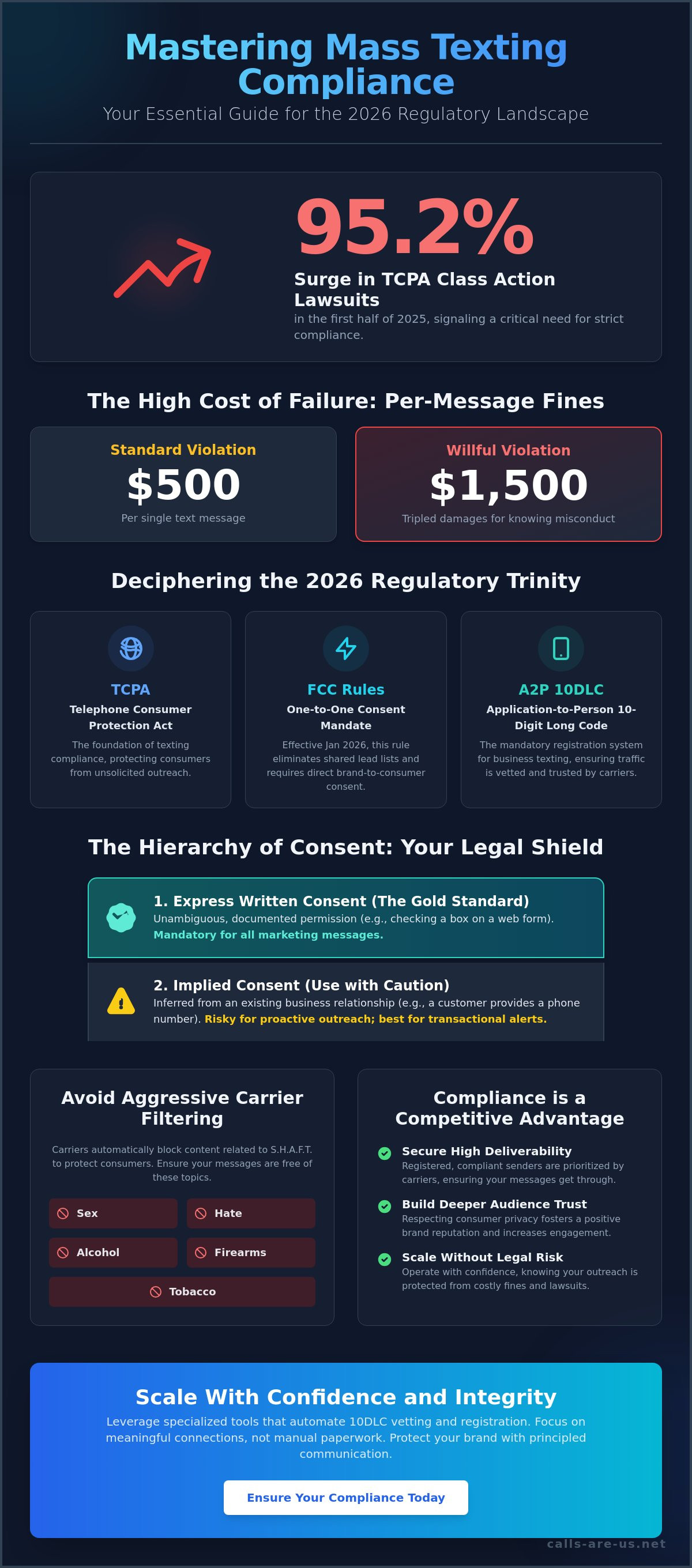
TCPA class action lawsuits surged by 95.2% in the first half of 2025. This staggering figure represents more than just a legal trend; it's a wake-up call for every organization using mobile outreach to connect with their community. You likely feel the mounting pressure of shifting carrier rules and the frustration of seeing critical messages blocked by aggressive filters. It's exhausting to balance the need for immediate impact with the fear of a $1,500 fine for a single willful violation.
This guide empowers you to master mass texting compliance by navigating the complexities of A2P 10DLC registration, the TRACED Act, and the latest carrier surcharges with total legal confidence. We will break down the mandatory registration process, explain the new one-to-one consent mandates, and provide a clear roadmap to ensure your outreach achieves high deliverability while fostering deep trust. You'll learn how to secure your brand, protect your budget, and honor your audience through every message sent.
Key Takeaways
View compliance as a strategic catalyst. High-integrity outreach directly translates to superior deliverability and deeper audience trust.
Master the 2026 regulatory landscape. Navigate A2P 10DLC registration and TCPA mandates to ensure your mass texting compliance remains bulletproof against shifting carrier rules.
Build a definitive hierarchy of consent. Learn the critical distinctions between implied and express written permission to create a defensible paper trail for every contact.
Audit your content against the 2026 checklist. Identify and eliminate SHAFT-related triggers to prevent aggressive carrier filtering and ensure your first message lands successfully.
Scale your impact with high-integrity tools. Leverage specialized software that automates 10DLC vetting and registration so you can focus on meaningful connections rather than manual paperwork.
Table of Contents
Beyond the Fine: Why Compliance is Your Most Strategic Outreach Asset
Compliance is the essential infrastructure of modern outreach. While many organizations view regulatory hurdles as barriers to growth, the reality is that mass texting compliance serves as a powerful filter that separates authoritative leaders from high-volume noise. By adhering to established standards, you aren't just checking boxes; you are verifying your brand's integrity, ensuring your voice is heard, and protecting the longevity of your communication channels.
This shift from "spamming" to "principled communication" reflects a deeper evolution in digital ethics. The foundational rules established by the Telephone Consumer Protection Act (TCPA) were designed to protect consumers, but they also provide a roadmap for businesses to build lasting trust. When you prioritize permission over persistence, you transform a simple text message into a meaningful connection.
To better understand how carrier laws impact your strategy, watch this helpful overview:
The cost of ignoring these standards extends far beyond the immediate financial penalties. While a willful violation can trigger a $1,500 fine per message, the erosion of brand reputation is often permanent. Consumers today are fiercely protective of their digital space. A single unsolicited message can trigger a block, a carrier report, or a public complaint that damages your organization's standing in the market. Mass texting compliance is your shield, ensuring your outreach remains efficient, effective, and ethical.
The Psychology of the Mobile Inbox
The mobile phone is our most personal device. It's the first thing we check in the morning and the last thing we see at night. When an organization enters this space, it must do so with the humility of a guest rather than the entitlement of an advertiser. Respecting boundaries through clear opt-ins and easy opt-outs actually increases engagement. People respond to brands they trust, and that trust is earned through a human-centric philosophy that values the recipient's time, privacy, and preferences.
Compliance as a Competitive Advantage
Carriers prioritize traffic from registered, compliant senders. By completing your A2P 10DLC registration and maintaining high standards, you unlock better message throughput (TPS) and lower filtering rates. This creates a distinct advantage: while non-compliant competitors struggle with blocked traffic, your messages reach their destination with speed and precision. Principled communication allows you to:
Secure reliable deliverability across all major networks.
Build a reputation as a transparent and ethical communicator.
Scale your outreach without the looming shadow of legal intervention.
Deciphering the 2026 Regulatory Landscape: TCPA, FCC, and A2P 10DLC
Regulatory environments don't just exist to restrict; they exist to refine. The landscape of 2026 is defined by transparency, accountability, and the total elimination of "gray route" messaging. Carriers and federal agencies have unified their efforts to protect the sanctity of the mobile consumer. Central to this effort are the FCC rules that now mandate direct, one-to-one consent between a brand and a recipient. This rule, which became effective in January 2026, effectively ended the era of shared lead lists and third-party consent loopholes. Organizations must now demonstrate a clear, documented relationship with every individual in their database. Failing to do so invites severe consequences, including TCPA fines that range from $500 for standard violations to $1,500 for willful misconduct.
Application-to-Person 10-Digit Long Code (A2P 10DLC) is the air that business messaging breathes. Since February 2025, major US carriers have blocked all unregistered traffic, making mass texting compliance an operational necessity. The Campaign Registry (TCR) serves as the central clearinghouse for this data, acting as a bridge between brands, service providers, and carriers. By registering your brand and specific use cases, you provide the industry with the visibility required to trust your traffic. This system ensures that legitimate organizations get the throughput they need while malicious actors are filtered out before they reach an inbox.
The 10DLC Ecosystem Explained
Registration is a two-step process involving Brand and Campaign verification. For 2026, standard brand registration costs $48 and includes secondary vetting to verify your organization's legitimacy. Once verified, you must register specific Campaigns for each use case, such as customer alerts or marketing. These campaigns carry registration fees of approximately $15 to $17, along with monthly maintenance costs. Your vetting score is the most critical factor in your success. A high vetting score empowers your brand, stabilizes your delivery, and maximizes your daily message throughput (TPS).
TCPA: The Golden Rules of Mobile Outreach
The Telephone Consumer Protection Act remains the primary legal framework for mobile outreach. In 2026, the definition of an autodialer is broad, covering most systems used for high-volume messaging. Compliance requires strict adherence to calling windows, typically between 8:00 AM and 9:00 PM in the recipient's local time zone. Political entities often enjoy certain exemptions regarding non-commercial content, yet they must still navigate the complexities of carrier-level 10DLC registration to ensure their voices are heard. Commercial entities face stricter requirements for express written consent, particularly for promotional content.
Staying ahead of these shifts requires a partner who understands the intersection of technology and law. Many leaders find that utilizing professional mass texting tools simplifies the registration process and ensures every message meets the latest standards.
The Hierarchy of Consent: Navigating Permission in 2026
Permission is the currency of the digital age. It represents a fundamental agreement between your organization and the individuals you serve. In the context of mass texting compliance, this agreement is categorized into a strict hierarchy: implied, express, and express written consent. While implied consent may suffice for purely transactional updates between established partners, promotional outreach requires the highest level of authorization. Adhering to the FCC rules on robocalls and texts ensures you never cross the line from helpful advocate to intrusive solicitor.
Bought lists are an immediate death sentence for your deliverability. Carriers analyze traffic patterns with surgical precision; they can identify the lack of a prior relationship within seconds. When you send messages to individuals who haven't directly opted in to your specific brand, you trigger aggressive filters that can lead to permanent number blacklisting. True outreach integrity relies on a documented paper trail. You must be able to prove when, where, and how each recipient provided their consent, typically through time-stamped logs of website form submissions or keyword responses.
A clear and accessible Privacy Policy is no longer optional. It's the cornerstone of your legal defense and a requirement for A2P 10DLC vetting. Your policy must explicitly state how you collect, use, and protect mobile data, ensuring recipients that their information won't be sold or shared with third parties for marketing purposes. This transparency builds the "human-centric" trust mentioned earlier, transforming a legal requirement into a powerful brand asset.
Peer-to-Peer (P2P) vs. Automated Consent
The distinction between P2P and automated messaging often confuses even seasoned organizers. P2P outreach relies on human intervention, where a real person initiates each individual message, creating a more conversational and personal experience. Understanding peer to peer texting best practices is essential for maintaining this "human-in-the-loop" standard. While P2P often operates under implied consent for non-commercial use, transitioning those same supporters to automated mass broadcasts requires a new, explicit opt-in to remain compliant.
The Opt-In Workflow: Best Practices
A transparent opt-in process is your best defense against litigation and filtering. The double opt-in remains the gold standard for high-performance deliverability. After an initial sign-up, send a confirmation text requiring the user to reply "YES" to verify their intent. This two-step verification ensures your list is clean, engaged, and legally sound. Always include required disclosures at the point of collection, clearly stating message frequency, possible data rates, and accessible links to your Privacy Policy.
Your 2026 Compliance Checklist: Avoiding Filters and Protecting Deliverability
Deliverability isn't a matter of luck. It's the direct result of a disciplined approach to mass texting compliance that respects both carrier algorithms and recipient expectations. Modern carriers employ sophisticated AI to scan for SHAFT content (Sex, Hate, Alcohol, Firearms, and Tobacco). Including any of these topics in your messages, even in a non-promotional context, often results in an immediate and permanent block. You must audit your scripts to ensure they remain within the safe harbor of professional, helpful, and relevant communication.
The anatomy of your first message determines your long-term sender reputation. Every initial contact must clearly identify your organization and provide an explicit opt-out path. A compliant first message typically follows a specific structure: "[Brand Name]: Hi [Name], thanks for joining! Msg and data rates may apply. Reply STOP to opt out." This transparency reduces friction, builds trust, and satisfies carrier requirements in a single step. By being upfront about your identity, you prevent the reports and blocks that lead to carrier intervention.
Monitoring your error rate is your early warning system. High volumes of 3000-series error codes indicate that carriers are shadow-banning your traffic due to poor list hygiene or non-compliant content. If your undelivered message rate exceeds a certain threshold, typically 5%, you must pause, investigate, and recalibrate your strategy before your numbers are permanently flagged. Proactive monitoring allows you to identify risks, refine content, and secure delivery before a minor issue becomes a campaign-ending crisis.
Content Best Practices for Deliverability
Public URL shorteners are a major red flag for carrier filters. These tools are frequently used by bad actors to hide malicious destinations, leading carriers to block them by default. Instead, utilize branded domains that reinforce your identity and provide a clear destination for the recipient. Your texts shouldn't feel like isolated blasts; they should function as integrated campaign communications that provide consistent value across all touchpoints. Avoid spammy capitalization and excessive punctuation, as these triggers often lead to manual review and filtering.
The Opt-Out Mandate
Respecting a "STOP" request is a legal requirement and a core tenet of ethical outreach. You must support standard keywords like STOP, CANCEL, and UNSUBSCRIBE. In 2026, your processing must be comprehensive. If a recipient opts out via SMS, your system should ideally synchronize that preference across your Voice Broadcast and Direct mail channels to prevent accidental re-engagement. Once a STOP message is received, you're permitted to send exactly one confirmation message to acknowledge the request. Any communication beyond that is a violation that invites legal risk.
Ready to secure your outreach? You can start building your compliant mass texting strategy with our expert support today.
Scaling with Confidence: How Calls-Are-Us Facilitates Principled Communication
Scaling your outreach shouldn't feel like a gamble. It requires a partner that integrates mass texting compliance into the very fabric of your operations. Calls-Are-Us serves as that visionary ally, providing the technical infrastructure and strategic guidance needed to navigate a high-stakes digital environment. Our political campaign texting software is built with these safeguards in mind, ensuring that every message you send aligns with current carrier standards and federal laws. We handle the heavy lifting of A2P 10DLC registration and vetting, transforming a complex administrative burden into a streamlined path for growth.
True influence is rarely achieved through a single channel. By combining the immediacy of SMS with the authoritative reach of political voice broadcasting, you build a multi-dimensional presence that commands attention. This integrated approach allows you to reinforce your message across different touchpoints, ensuring your voice remains consistent and your brand remains trusted. We provide the tools to synchronize these efforts, allowing you to manage Voice Broadcast, Peer-to-peer texting, and Direct mail from a unified, compliant foundation.
Our Approach to Regulatory Safety
We believe in proactive protection. Our platform utilizes real-time content scanning technology to identify potential SHAFT triggers or "spammy" patterns before they impact your deliverability. Beyond the tech, we offer expert consulting on script writing and consent workflows to ensure your mass texting compliance remains beyond reproach. We constantly monitor carrier updates and FCC rulings, acting as your early warning system in an ever-changing regulatory landscape. This commitment to safety allows you to communicate with total legal confidence.
Transforming Outreach into Impact
Technology is most powerful when it serves a human purpose. We don't just provide software; we champion a philosophy of inclusive and open dialogue that respects the recipient. By pairing tech-savvy tools with a human-centric strategy, we help you foster deep connections that drive real-world action. Your goals are too important to be sidelined by filtering or litigation. Contact our team to audit your current compliance posture and discover how a principled approach to outreach can maximize your organizational impact.
Lead with Integrity: Future-Proofing Your Outreach Strategy
Outreach in 2026 demands a fundamental shift from volume-based tactics to value-driven engagement. You've seen how mass texting compliance serves as the essential infrastructure that ensures your message actually reaches its intended destination. By mastering the A2P 10DLC ecosystem and prioritizing the hierarchy of consent, you protect your brand's reputation and your organization's operational budget. Principled communication transforms every text into a building block for long-term trust and sustainable growth.
You don't have to navigate these technical and legal complexities alone. Calls-Are-Us has been a dedicated partner for organizations in over 40 states since 2010, providing the seasoned expertise needed to thrive in high-pressure environments. We offer industry-leading deliverability and expert 10DLC registration support for campaigns and businesses alike. Our team is ready to help you facilitate meaningful human connections while maintaining total legal confidence. Secure your outreach strategy with Calls-Are-Us today and turn regulatory challenges into your greatest competitive advantage. Your audience is waiting to hear from a voice they can truly trust.
Frequently Asked Questions
Is mass texting legal for political campaigns in 2026?
Yes, mass texting is legal for political campaigns provided you adhere to 10DLC registration and TCPA mandates. The FCC's "one-to-one" consent rule effective January 2026 means you cannot use leads from third-party organizers without direct permission. You must verify your brand and register each specific campaign to ensure deliverability. Maintaining mass texting compliance is the only way to protect your outreach from aggressive carrier filters.
What is the difference between A2P and P2P texting compliance?
A2P refers to automated systems sending messages; P2P involves a human agent initiating each text. Carriers now classify almost all professional outreach as A2P traffic. This means even P2P campaigns must register via 10DLC to avoid being blocked. While P2P allows for more conversational interaction, both pathways require documented consent to meet the high standards of modern outreach integrity and carrier transparency.
How do I register my brand for 10DLC compliance?
Registration involves a two-step process through The Campaign Registry (TCR) via your service provider. First, you submit your brand information, including your legal name and EIN, for a one-time fee of $48 in 2026. Second, you register specific campaigns by describing your use case and providing message samples. This transparency allows carriers to vet your traffic, assign a trust score, and grant the throughput your organization needs.
Can I send text messages to people who haven’t opted in if I am a nonprofit?
Nonprofits are not exempt from the requirement to obtain consent before sending text messages. While certain voice call rules differ for tax-exempt organizations, carrier-led 10DLC standards mandate that every recipient must opt in. Sending messages to individuals who haven't provided permission will trigger high filtering rates and potential number blacklisting. Principled communication requires building your own list through transparent website forms or keyword opt-ins.
What happens if my campaign is flagged for a TCPA violation?
Flagged violations trigger immediate legal and financial liabilities. You face statutory damages of $500 per message, which scales to $1,500 for willful misconduct. Beyond the fines, your organization risks being permanently banned from carrier networks. With TCPA class action lawsuits rising by 95.2% in early 2025, maintaining mass texting compliance is your primary defense against devastating litigation that could compromise your entire mission and brand reputation.
Do I need a separate registration for every texting campaign I run?
Carriers require separate registrations for every distinct use case you operate. For example, a campaign for customer alerts must be registered separately from a campaign for promotional marketing. Each registration in 2026 costs approximately $15 to $17 plus a monthly maintenance fee. This granular level of reporting ensures carriers can monitor traffic patterns effectively and maintain the integrity of the mobile ecosystem for all users.
What is SHAFT and why does it matter for my text content?
SHAFT is an acronym for Sex, Hate, Alcohol, Firearms, and Tobacco. These content categories are strictly monitored and often prohibited by carrier policies and CTIA guidelines. Including these topics in your messages will likely lead to immediate blocking of your traffic. To protect your deliverability, you must audit your scripts and ensure your content remains focused on professional, safe, and helpful interactions that respect consumer boundaries.
How do I handle opt-outs if I use multiple outreach platforms?
Effective opt-out management requires a centralized system that synchronizes preferences across all communication channels. When a recipient replies STOP, your software should automatically update their status for SMS, Voice Broadcast, and Direct mail. New rules effective in April 2025 require you to honor these requests within 10 business days. Maintaining a unified database prevents accidental re-engagement and demonstrates your commitment to ethical, human-centric outreach.



Comments