_edited.png)
Mass Texting Compliance: The 2026 Guide to Ethical & Effective Outreach

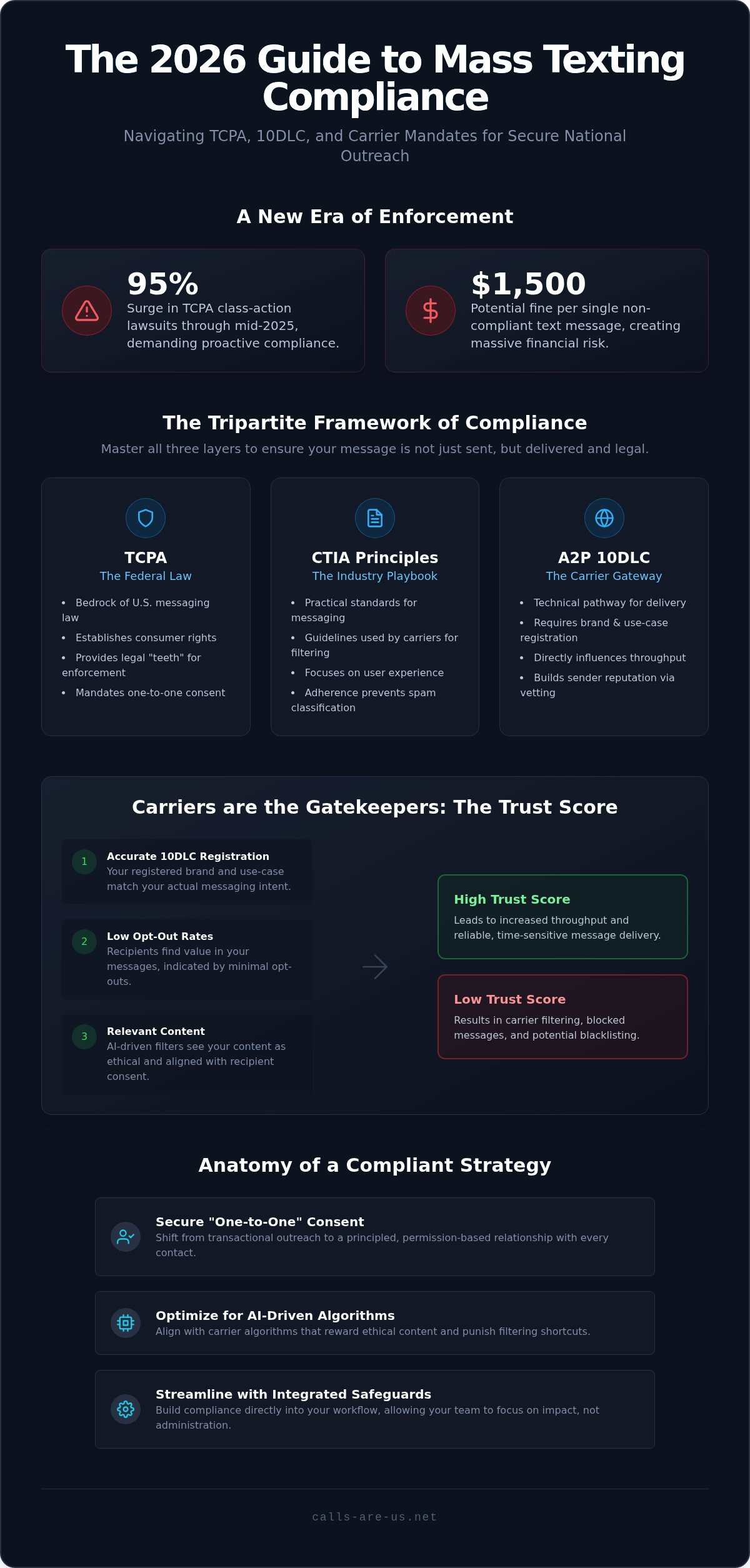
TCPA class-action lawsuits surged by nearly 95% through mid-2025, leaving unprepared organizations to face fines up to $1,500 per single text message. This reality makes mass texting compliance more than just a legal checkbox; it's the foundation of your brand's reputation and its ability to connect. You've likely felt the sting of messages being blocked by carriers or the mounting pressure to keep up with the FCC's one-to-one consent rules. It's exhausting to navigate a landscape where the rules seem to shift every quarter, making it difficult to maintain trust with your audience.
We're here to turn that complexity into a clear competitive advantage. You'll learn how to master the intricate web of 10DLC registration, TCPA mandates, and A2P carrier requirements to ensure your national campaigns reach their destination without interference or financial penalty. This guide provides a clear roadmap for registration, a breakdown of current carrier surcharges, and a strategy for protecting your organization against legal audits. We'll show you how to build a communication strategy that's fast, efficient, and deeply principled.
Table of Contents
The Evolution of Mass Texting Compliance in 2026
Compliance is the bridge between a blocked message and a successful voter action. In 2026, the era of the unregulated wild west is over. We've transitioned into a vetted, high-trust ecosystem where mass texting compliance serves as a strategic asset rather than a regulatory burden. This shift ensures that legitimate voices are heard while noise is filtered out, creating a more effective environment for national outreach.
For organizations aiming for high-stakes influence, understanding the mechanics of Bulk messaging is no longer optional. It's the price of admission. Ethical communication creates a foundation of trust that allows your message to resonate with the recipient instead of being dismissed as an intrusion. This evolution rewards those who prioritize transparency and punishes those who rely on outdated, high-volume tactics that ignore the consumer experience.
Why Carriers Control the Gates
Carriers act as the ultimate gatekeepers of the mobile experience. Their primary goal is to protect the consumer from the friction of unsolicited spam, ensuring that the mobile inbox remains a space for meaningful interaction. To achieve this, they've implemented a sophisticated vetting ecosystem that evaluates every sender before a single character is transmitted. This process is designed to facilitate genuine connections while barring bad actors from the network.
Your campaign's Trust Score is the new currency of deliverability. This score is determined by three key factors: the accuracy of your 10DLC registration, the consistency of your opt-out rates, and the relevance of your content to the recipient. High trust scores lead to increased throughput, ensuring your time-sensitive alerts reach voters exactly when they matter most. By aligning with carrier goals, you transform a potential obstacle into a reliable pipeline for engagement.
The High Cost of Non-Compliance
Fines are only the beginning of the damage. While the financial penalties are steep, the permanent loss of access to your audience is the true threat to your mission. Mobile networks now employ aggressive blacklisting protocols that can silence an organization's entire communication infrastructure across all major carriers. Once a brand is flagged for systemic violations, regaining that lost trust is a mountain that few successfully climb.
Under current 2026 enforcement, a single non-compliant text message can trigger TCPA fines ranging from $500 to $1,500 per violation. This creates a ripple effect where one poorly executed campaign can jeopardize your entire outreach strategy, including your voice broadcasts and P2P efforts. Protecting your ability to communicate requires a proactive, disciplined approach to regulatory standards that goes beyond simple box-ticking; it requires a commitment to ethical standards that protect both your organization and your audience.
Navigating the Regulatory Landscape: TCPA, CTIA, and 10DLC
Modern outreach exists within a tripartite regulatory framework. This structure consists of federal law, industry guidelines, and carrier-specific requirements. Achieving mass texting compliance means aligning with all three layers simultaneously to ensure your voice isn't just loud, but also legal. Federal law provides the legal boundaries, industry standards offer the operational playbook, and carrier registration creates the technical pathway for delivery.
The Telephone Consumer Protection Act (TCPA) remains the bedrock of US messaging law. It establishes the fundamental rights of the consumer and the responsibilities of the sender. While the TCPA provides the legal "teeth," the CTIA Messaging Principles offer the practical standards that carriers use to justify message filtering. Adhering to FCC rules ensures your organization stays on the right side of federal mandates while respecting the privacy of your audience. If you ignore these guidelines, carriers will treat your traffic as a threat to the user experience.
Understanding A2P 10DLC Registration
A2P 10DLC registration changed how national campaigns operate. This system requires brands to register their identity and their specific use cases through the Campaign Registry. When you register, you must disclose your brand details, including your EIN and a clear description of your messaging intent. This transparency allows carriers to distinguish between commercial, advocacy, and political traffic, which directly influences your throughput and deliverability.
Campaigns thrive on the trust established during this vetting process. Standard brand registration involves a one-time fee of $48, while campaign vetting fees typically range from $15 to $17. Once registered, monthly campaign fees can range from $1.50 for low-volume outreach to $10 for standard commercial use. By providing this upfront clarity, you secure a "passport" for your messages, reducing the risk of them being flagged by AI-driven spam filters. You can simplify this process by building a unified compliant strategy that handles these technical hurdles automatically.
TCPA and the 'Express Consent' Mandate
True consent is the only path to sustainable engagement. The TCPA requires "Prior Express Written Consent" for any automated marketing or promotional messages. This isn't a mere suggestion; it's a strict requirement that verbal agreements or purchased lead lists cannot satisfy. In 2026, the FCC's "one-to-one" consent rule is in full effect, meaning consent must be obtained directly by your brand and cannot be shared across multiple organizations or platforms.
Consent must be documented and easily retrievable for potential audits. To meet 2026 standards, your web form must display a clear, conspicuous disclosure stating that the user agrees to receive automated marketing texts from your specific brand, that consent is not a condition of purchase, and that message and data rates may apply. Failing to provide this specific disclosure leaves you vulnerable to class-action lawsuits where damages can reach $1,500 per message. By prioritizing these ethical standards, you protect your mission and your bottom line from avoidable legal interference.
The Anatomy of a Compliant Opt-In Strategy
Permission is the bedrock of influence. You can't lead an audience that hasn't invited you to speak. Establishing mass texting compliance starts with a transparent, documented, permission-based relationship that prioritizes the recipient's autonomy. This isn't just about avoiding legal trouble; it's about building a high-trust connection that increases the impact of every message you send.
Use the "Hook-and-Elaborate" method for gathering consent. First, offer a clear promise of value, such as "Receive urgent campaign updates." Then, provide the detailed disclosures required by law. Your record-keeping is your primary defense against litigation. Documentation must include the time, date, source, and exact language used when the user opted in. Integrating these touchpoints into your voter outreach strategy ensures that your growth is both rapid and legally resilient.
Methods of Gathering Express Written Consent
Digital web forms are the most common entry point for modern campaigns. To remain compliant, ensure your opt-in checkboxes aren't pre-selected. Users must take an affirmative action to join your list. According to the latest TCPA rule changes, consent must be specific to your brand and clearly state that automated technology will be used. Keywords and short codes offer a frictionless alternative for live events, but you must still provide an immediate, compliant reply that confirms their subscription and lists the frequency of messages. If you use paper sign-ups, maintain a strict chain of custody by scanning and storing those physical records digitally for at least four years.
Managing the Opt-Out Lifecycle
Respecting a "STOP" request is just as important as securing the initial opt-in. Carriers demand immediate, automated processing for mandatory keywords like STOP, QUIT, and UNSUBSCRIBE. Once a user opts out, you're permitted to send exactly one confirmation message. This final text must only confirm the unsubscribe and provide no further marketing content. Attempting to re-engage former subscribers using "zombie" consent, or old lists without a fresh opt-in, is one of the fastest ways to trigger carrier filtering and heavy fines. Maintaining a clean, active list is a hallmark of professional communication that values the recipient's time and choice.
Avoiding the Spam Filter: Technical Best Practices
Deliverability is a technical discipline. It rewards those who respect the network and punishes those who seek shortcuts. Achieving mass texting compliance requires more than just legal consent; it demands a deep understanding of the AI-driven filters that carriers use to evaluate traffic in real-time. These algorithms look for patterns of behavior that mimic spam, such as sending identical messages to a massive audience simultaneously. If your campaign looks like a machine, the network will treat it like one.
Variety is essential for maintaining a high trust score. When you send the same text to 100,000 people, you trigger red flags that can lead to immediate message filtering. Sophisticated campaigns use dynamic fields and message rotation to ensure every communication feels unique and personal. By monitoring your delivery reports and error codes, you can identify filtering issues early and adjust your strategy before your reputation is damaged. Technical mass texting compliance is about proving you're a legitimate sender through consistent, high-quality behavior.
Content Filtering and SHAFT Regulations
Carriers strictly enforce SHAFT regulations, which restrict content related to Sex, Hate, Alcohol, Firearms, and Tobacco. Even if your organization is legally permitted to discuss these topics, carriers often block them to maintain a family-friendly environment on their networks. You must also be cautious with your choice of technical tools. Public URL shorteners like Bitly are frequently blacklisted because they're commonly used by bad actors to hide malicious links. Utilizing branded domains for your links increases transparency and improves your chances of reaching the inbox. Using high-pressure sales terms or excessive capitalization can trigger immediate content blocks, significantly lowering your campaign's overall throughput.
Managing Throughput and Volume Spikes
Carriers utilize "Leaky Bucket" algorithms to manage network congestion. This means they throttle high-volume traffic to ensure a consistent flow of data across their infrastructure. If you attempt to send 1 million texts on the first day of a new campaign, you'll likely face significant delivery delays or outright blocks. A successful rollout requires a warm-up period where you gradually increase your volume over several days to establish a baseline of trust with the carriers.
The choice between P2P vs broadcast texting plays a critical role in how you manage these volume spikes. Peer-to-peer messaging often bypasses some of the stricter automated filters because it mimics human-to-human interaction, while broadcast texting offers the speed needed for time-sensitive alerts. Secure your campaign's deliverability by partnering with an expert in mass texting today.
Scaling Your Outreach Safely with Calls-Are-Us
Scaling a national campaign requires more than just volume; it requires a partner who understands the high-stakes nature of modern influence. Calls-Are-Us serves as your authoritative visionary, navigating the complexities of 10DLC and TCPA so you don't have to. We integrate mass texting compliance directly into your operational workflow, transforming technical hurdles into a streamlined path for audience engagement. By aligning technological sophistication with ethical communication, we empower your organization to build meaningful connections that drive real-world impact.
Success in 2026 is found at the intersection of diverse channels and rigid standards. Our platform ensures that your messaging remains consistent, legal, and effective across every touchpoint. When you combine the speed of compliant texting with the strategic depth of political voice broadcasting, you create a unified front that respects the recipient while achieving your goals. We don't just provide tools; we provide a philosophy of open dialogue protected by the industry's highest standards.
Integrated Compliance for National Campaigns
Managing a national footprint involves juggling varying state laws and carrier preferences. Calls-Are-Us simplifies this process by providing automated 10DLC registration assistance and comprehensive brand vetting support for every campaign. Our system generates real-time filtering alerts, allowing your team to adjust messaging immediately if deliverability begins to dip. This proactive approach is bolstered by our political campaign call center, which supports a multi-channel strategy by ensuring that your live outreach and digital messaging work in perfect, compliant harmony.
The Human Element in P2P Messaging
Peer-to-peer (P2P) messaging remains a highly compliant alternative to automated broadcasts because it preserves the human element of communication. In a P2P environment, every message is sent individually by a real person, which aligns with carrier preferences for authentic, non-bot interactions. This method facilitates a genuine two-way dialogue that builds rapport with voters or customers while staying firmly within regulatory bounds. By leveraging our sophisticated P2P tools, you transform technical mass texting compliance into a bridge for human connection, ensuring your organization is seen as a trusted advocate rather than an automated intrusion.
Future-Proof Your National Outreach Strategy
We've navigated the shift from the "wild west" of messaging to a high-trust ecosystem where carriers act as the primary gatekeepers. You now understand that 10DLC registration isn't just a hurdle; it's your passport to reliable deliverability. By maintaining rigorous opt-in documentation and respecting the technical boundaries of carrier filters, you transform legal requirements into a strategic advantage. Achieving sustainable mass texting compliance is about building a foundation of integrity that protects your brand from both filters and fines.
As an expert partner vetted in 40+ states, we provide the deep 10DLC registration support and multi-channel outreach integration you need to thrive in this complex environment. We handle the technical friction so your team can focus on the impact of your message. Scale your outreach with a compliant partner—Contact Calls-Are-Us today. Your mission is too important to be silenced by a spam filter. Let's work together to ensure your voice reaches the audience that matters most.
Frequently Asked Questions
What is the difference between A2P and P2P messaging in 2026?
A2P messaging refers to any communication sent from an application, while P2P involves a human manually initiating every single text. In 2026, carriers classify most high-volume outreach as A2P, requiring 10DLC registration to maintain deliverability. P2P remains a vital tool for organizations seeking deeper engagement because it often benefits from higher trust scores and lower filtering rates.
Does TCPA compliance apply to political campaigns and nonprofits?
Yes, the TCPA applies to all entities regardless of their tax-exempt or political status. While certain nuances exist for landline calls, sending automated text messages to mobile devices requires prior express consent for all organizations. Maintaining mass texting compliance is essential for nonprofits and political campaigns to avoid devastating class-action lawsuits and carrier blacklisting.
How do I register for 10DLC as a national organization?
National organizations register by providing their legal brand details, including an EIN, to the Campaign Registry through their service provider. Once the brand is vetted, you must submit specific "Campaign" use cases for approval. This two-step process establishes your identity and intent, allowing carriers to assign appropriate throughput levels for your national outreach.
What are the specific penalties for sending non-compliant mass texts?
Penalties for TCPA violations range from $500 to $1,500 per individual text message sent without consent. For organizations operating at scale, these costs accumulate rapidly and carry no maximum cap in class-action litigation. Additionally, violations of the National Do Not Call Registry can result in fines reaching $43,792 per message, making total compliance a financial necessity.
Can I use a purchased list for my mass texting campaign?
Purchased lists are strictly prohibited under 2026 carrier guidelines and FCC regulations. The "one-to-one" consent rule requires that every subscriber give direct, unambiguous permission to your specific brand. Using a third-party list will trigger immediate spam filters, damage your brand's reputation, and leave your organization vulnerable to significant legal penalties.
How do I handle opt-out requests for peer-to-peer (P2P) messaging?
Opt-out requests in P2P campaigns must be honored immediately through any reasonable method the user chooses. While automated systems handle "STOP" keywords, your agents must manually flag and remove users who request an opt-out through natural language. Processing these requests within 10 business days is the legal minimum, but instant removal is the industry standard for maintaining trust.
What is the SHAFT rule in SMS marketing compliance?
The SHAFT rule represents a set of content categories that carriers either prohibit or strictly regulate: Sex, Hate, Alcohol, Firearms, and Tobacco. Even with valid consent, messages containing these topics are often blocked by carrier-level filters to protect the consumer experience. Understanding these restrictions is a key component of mass texting compliance for any organization operating in sensitive industries.
How long do I need to keep records of user consent?
You should maintain records of user consent for at least four years from the date of the last message sent. This timeframe aligns with the statute of limitations for TCPA claims and provides a necessary legal defense during audits. These records must include the timestamp, the specific opt-in language used, and the IP address or physical source of the consent.



Comments